
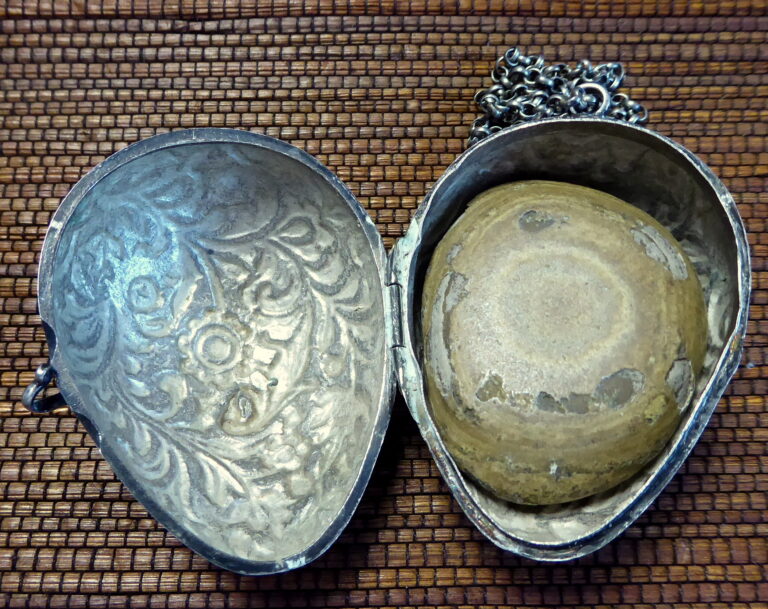
Size 43mm x 34mm. Case Size 55mm x 42mm.
Price £3450 ONO We pay UK Delivery.
A Rare 18th – 19thC Silver Cased, Bezoar Stone.
Bezoar stones are found in the intestines of animals. They are formed by indigestible materials being surrounded by layers of calcium and magnesium phosphate, which stomach contractions squeeze into a rounded shape. These were introduced into Western medicine by Arabian doctors during the twelfth century. The name bezoar is derived from the Persian word pa(d)zhar meaning ‘antidote against poison’. According to legend, bezoar stones gave protection against plagues and deflected evil spirits.
They were used as antidotes to arsenic, the poison used most commonly in European courts. Sought by European nobility, Bezoar Stones are once thought to have curative properties. The ornate containers were believed to enrich the medicinal effects. The use of bezoars was widespread during the sixteenth century, and their value was ten times more than their weight in gold. These were rare and expensive items and many kings owned one or more specimens, some of which were mounted as pieces of jewelry. Sixteenth and seventeenth century physicians wrote extensively about them, describing their properties and use.
This Rare 18th – 19th Silver Century cased, ‘Bezoar’, stone is beautifully marked, its surface clearly displaying the layering from growth, progressively built up during formation.
By the 18th Century the use of ‘Bezoar’ stones as medical treatment or as an antidote to poison began to decline however their great rarity, connection to wealth and power and the myths and legends surrounding them ensured they retained their great worth, desired and pursued and admired as natural curiosities by a new enlightened breed.
This fine example was from a German collection.


